For a family of four, how often to pump septic tank family of 4 homes depends on tank size, water use, and waste. Household size gives only a starting point. Past service records, system checks, and warning signs give a better guide. Good daily habits also help protect the tank and drainfield.
Table of Contents
- How often should a family of four pump a septic tank?
- Can homeowners handle septic tank maintenance themselves?
- What should you do before scheduling septic tank pumping?
- What happens during a septic tank pumping appointment?
- What can go wrong when a septic tank is not pumped on time?
- When should you call a septic tank pumping professional?
- How can a family of four maintain a septic system between pump-outs?
- Key takeaways
- Frequently Asked Questions
- Conclusion
How often should a family of four pump a septic tank?
A family of four should plan pumping around the tank size, water use, and waste. A smaller tank may fill sooner than a larger tank. The same family may also need different timing after changes in water use or household size.
A septic tank is a buried container that holds household wastewater. Solids sink to the bottom as sludge. Grease and light waste float in a layer called scum. Liquid leaves the tank and moves to the drainfield.
The drainfield is the soil area that treats liquid wastewater. When too much sludge or scum stays in the tank, flow can slow. Solids may then move toward the drainfield. Regular pumping removes this buildup before it causes trouble.
What determines the right pumping schedule?
Several details help show how often service may be needed:
- The tank size and design
- The number of people using the system
- Daily water use and laundry habits
- The amount of grease and solid waste entering the tank
- The age and condition of the system
- Whether the home has a garbage disposal
A family that uses a lot of water may need service sooner. Long showers, many laundry loads, and leaking fixtures add water to the system. A garbage disposal can also send extra solids into the tank.
The tank record is also useful. It may show when the last pump-out took place and what the professional found. If records are missing, a service visit can help create a better plan for the home.
How household habits affect septic tank frequency
Good habits can help the system work well between pump-outs. They cannot replace regular pumping. Spread laundry across the week, fix dripping faucets, and avoid flushing wipes, paper towels, grease, or harsh chemicals.
A home in Ocala may have different soil, weather, and system needs than another home. The best plan uses the actual tank and the way the family uses it. Septic Tank Pumping Ocala can help homeowners review service records and choose a sensible care plan.
The plan should change when the household changes. More residents, a new bathroom, regular guests, or higher water use can add strain. Keeping notes makes these changes easier to track.
Can homeowners handle septic tank maintenance themselves?
Homeowners can do simple checks and daily care. They should not open, inspect, or pump the tank themselves. A septic tank may hold harmful gas and unsafe wastewater. A trained professional has the tools and safety steps needed for tank work.
Routine tasks property owners can manage
Most homeowners can safely handle these basic tasks:
- Check toilets and faucets for leaks
- Keep cars and heavy equipment off the drainfield
- Keep deep-rooted trees away from tank areas and pipes
- Use less water during busy laundry days
- Keep pumping and repair records
- Flush only human waste and toilet paper
Homeowners can also look around the yard for wet spots, odors, or grass that grows much faster in one area. These checks do not require opening the tank. They help a family notice changes early.
A homeowner does not need a professional for these simple checks. The homeowner can also repair a small faucet leak or change daily water habits. Professional help is needed for tank access, sludge checks, pumping, and system tests.
Why tank inspection and pumping are not DIY jobs
A tank can contain gases that harm people quickly. Opening a lid without the right training can also lead to a fall. Wastewater may carry germs. Pumping requires special equipment and safe waste handling.
A professional can measure the sludge and scum layers. They can check the baffles, lids, tank walls, and visible pipes. They can also look for signs that liquid is not leaving the tank as it should.
A septic system includes more than a tank. It also has pipes, soil, vents, and a drainfield. A cesspool is not the same as a modern septic system. Knowing how the system works helps the owner choose the right care.
Septic Tank Pumping Ocala can explain the difference between system types. The team can also help a property owner understand what parts need attention. This is useful when buying a home or planning septic tank replacement.
What should you do before scheduling septic tank pumping?
Before scheduling service, gather records and walk around the property. This gives the professional useful details before the visit. It may also show if the home needs routine pumping or faster help.
Check household records and system details
Look for the tank installation record, past pumping receipts, inspection reports, and repair papers. Note the tank material, size, location, and age if known. Concrete and plastic tanks may have different access points.
A property owner may not know how deep the tank is buried. Soil, grading, landscaping, and tank design can affect its depth. Do not dig at random, especially near utility lines.
Records and locating tools are safer ways to find the tank. A professional can help when the location is not clear. Marking the area later can make future visits easier.
Write down any recent changes in the home. New residents, another bathroom, a garbage disposal, or frequent guests can change the system load. Tell the professional about these changes during scheduling.
Look for warning signs around the property
Check for slow drains, sewage odors, gurgling toilets, wet ground, or wastewater near the drainfield. Grass that stays very green over one spot can also be a warning. These signs may point to a full tank, a blocked pipe, or a drainfield issue.
Do not wait until every fixture stops working. A system may show small signs before a backup happens. Keep children and pets away from sewage. Do not walk across soft or wet ground near the tank or drainfield.
Take notes instead of opening the tank or trying a quick repair. Tell the professional what you saw and when it began. Clear details can help the visit go more smoothly.
What happens during a septic tank pumping appointment?
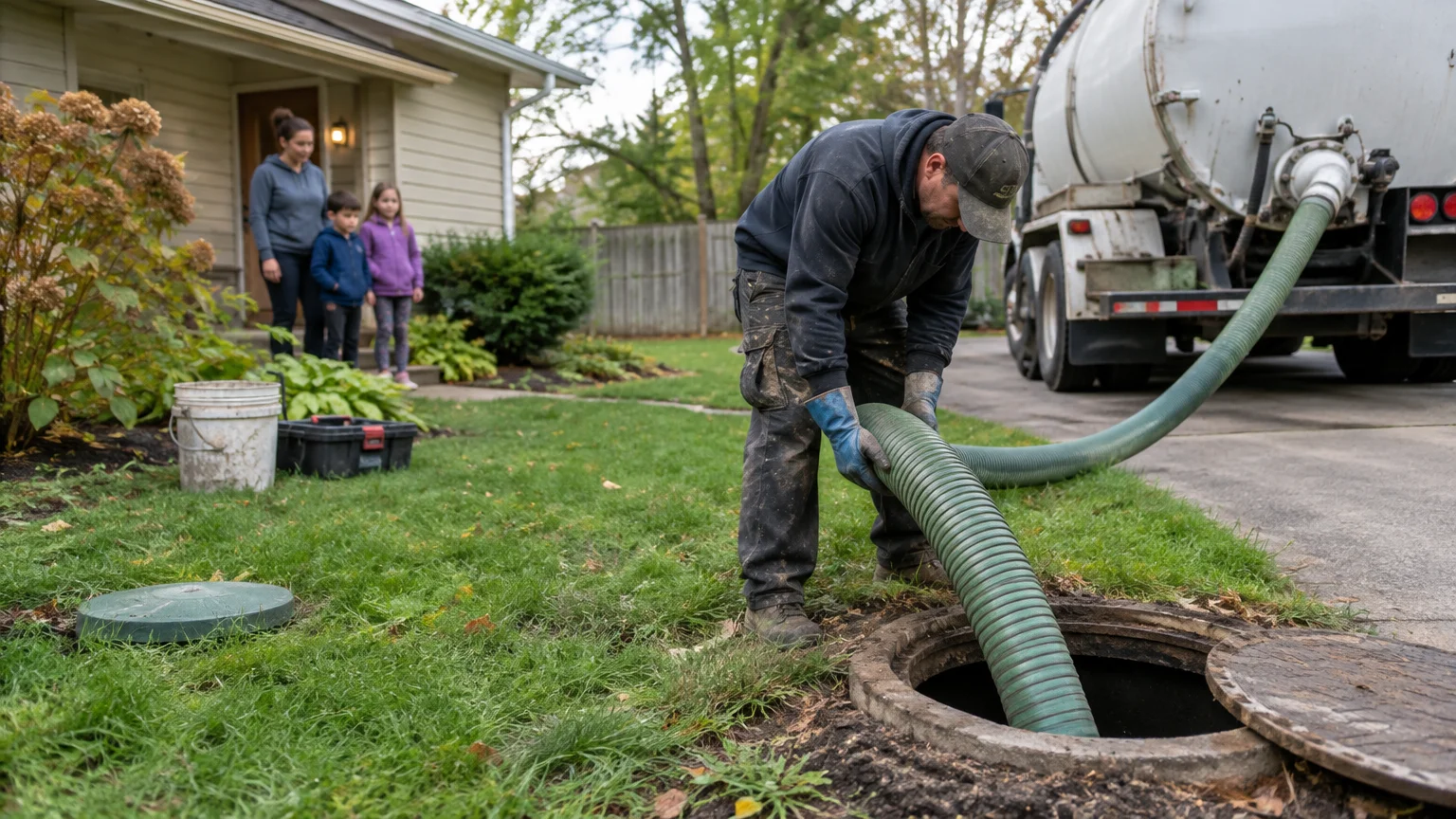
During a septic tank pumping appointment, a professional finds the tank, opens the access points safely, and removes settled waste. The professional may also check key parts of the system. The exact work depends on the tank location, access, and condition.
How the tank is located and accessed
The professional may review records or trace plumbing from the home. A probe or locating tool may help find the tank. Once it is found, the access lids may need to be uncovered.
Keep vehicles, furniture, and other items away from the work area. The tank should never be entered. Children and pets should stay away while the work takes place.
Septic gases can be dangerous even when the tank looks clean. A trained worker uses safe tools and methods around the opening. The homeowner should follow all safety directions during the visit.
What professionals inspect while pumping
Pumping removes sludge and scum from the tank. The professional may check the inlet and outlet baffles, walls, lids, and visible pipes. They may note cracks, damage, unusual buildup, or poor flow.
Pumping does not fix every septic problem. A blocked line, broken baffle, damaged lid, or failing drainfield may need separate work. Ask what the professional found and keep the service record.
That record helps the owner plan future septic pumping. It also gives Septic Tank Pumping Ocala useful information during later visits. The final cost is confirmed on a quote after the needed work is reviewed.
What can go wrong when a septic tank is not pumped on time?
When a tank is not pumped on time, solids may move toward the drainfield. This can slow wastewater flow and harm the soil treatment area. Common results include slow drains, odors, wet soil, and backups.
A delayed pump-out can turn a simple service need into a larger system problem. It may also affect landscaping and nearby water. Local rules may apply if repairs or replacement are needed.
Common signs of an overloaded or failing system
Property owners should watch for these signs:
- Toilets flush slowly or make a gurgling sound
- Several drains become slow at the same time
- Sewage odors appear indoors or outdoors
- Wastewater collects near the tank or drainfield
- Grass becomes thick and bright over one area
- Sewage backs up into a shower or floor drain
One sign does not prove the cause. A blocked household drain can look like a septic problem. Several signs together need prompt attention. Limit water use and keep people away from sewage until the cause is known.
How delayed maintenance can affect the drainfield
The drainfield needs open soil spaces to receive liquid wastewater. Too much solid waste can clog these spaces. Water may then rise near the surface or move in the wrong direction.
Once the drainfield is harmed, pumping alone may not solve the issue. The system may need more checks or repairs. A professional can explain the next step after looking at the tank, pipes, soil, and site.
Questions about septic tank replacement should be answered after the system is assessed. The needed work depends on the tank, access, damage, soil, and site layout. The final cost is confirmed on a quote.
When should you call a septic tank pumping professional?
Call a septic tank pumping professional when the last service date is unknown, the tank may be full, or warning signs appear. Prompt help matters when sewage backs up or wastewater reaches the ground. Waiting for a full failure can put the home and drainfield at greater risk.
Situations that need prompt service
Contact a professional when:
- The last pump-out date is unknown
- The planned service time has passed
- Several drains slow down together
- Sewage odors continue after basic drain checks
- Wastewater appears near the tank or drainfield
- A toilet or drain backs up with sewage
- The property is being bought, sold, or rented
A first-time buyer should request septic records and an inspection. Do this before relying on the system. Investors and landlords should keep service papers with the property file.
Tenants should report odors, backups, and wet ground to the owner quickly. Business owners should also keep service notes when a property has a septic system. Early reports can help prevent more damage.
What information to share when requesting help
Share the property location, tank type if known, last service date, and household size. Also describe recent symptoms and any access concerns. Tell the team about a garbage disposal, extra bathrooms, or recent plumbing changes.
A clear description helps the service team plan the visit. Septic Tank Pumping Ocala serves property owners and can help sort routine care from urgent concerns. Ask what the appointment includes and have the final cost confirmed on a quote before work begins.
How can a family of four maintain a septic system between pump-outs?
A family of four can protect its septic system by using water wisely and limiting harmful waste. A clear service record also helps. These habits reduce stress on the tank and drainfield, but they do not replace inspections or pumping.
Water-use and waste-disposal habits that help
Repair leaks as soon as possible. Avoid running several water-heavy appliances at once. Spread laundry across the week instead of doing every load in one day.
Only human waste and toilet paper belong in the toilet. Wipes, paper towels, cotton swabs, medicines, and cat litter should go in the right waste stream. Do not pour grease, paint, harsh chemicals, or large amounts of cleaner down drains.
Keep sheds, pools, cars, and heavy equipment off the drainfield. Do not direct roof water or runoff toward it. These steps help the soil receive wastewater as planned.
A practical maintenance record for homeowners
A simple record should list the tank location, size, material, pumping dates, inspection notes, and repairs. Add notes about household changes and water use. Keep the record with home papers, not only on a phone.
Review the record before moving into a home, renting it, or listing it for sale. If the records are missing, a professional can help find the tank and check its condition. Septic Tank Pumping Ocala can help Ocala families make a clear plan between pump-outs.
Key takeaways
- Pumping timing depends on tank size, water use, and waste.
- A family of four may need a different schedule than another family.
- Homeowners can do simple checks but should not open the tank.
- Odors, slow drains, wet soil, and backups need prompt attention.
- Good water and waste habits help protect the tank and drainfield.
Frequently Asked Questions
How often should a family of four pump its septic tank?
The timing depends on tank size, water use, and the amount of solid waste. A family of four may need a different schedule than another family of four. Past records and professional checks give a better guide than household size alone.
How deep is a septic tank usually buried?
A tank may sit at different depths based on soil, grading, design, and installation. Do not dig at random to find it. Records and locating tools are safer, especially near utility lines or landscaping.
What is a septic system?
A septic system treats household wastewater on the property. It usually includes a tank, pipes, and a drainfield. Solids settle in the tank, while liquid moves toward the drainfield for soil treatment.
Each part affects the others. A problem in the tank, pipes, or drainfield can affect the whole system. Regular care helps the system work as designed.
Can a homeowner inspect a septic tank alone?
A homeowner can check the yard, fixtures, odors, and service records without opening the tank. Tank access and inspection are not safe DIY tasks. Gases and wastewater can cause serious harm.
A trained professional should open the tank and measure its contents. The homeowner can safely share notes and keep the area clear. These steps help the inspection go well.
What should a homeowner do during a septic backup?
Stop using water and keep people and pets away from sewage. Contact a septic professional and explain what happened. Do not open the tank or pour harsh chemicals into drains.
Photos and notes can help explain the problem during the visit. Write down which fixtures backed up and when the issue began. This information may help the team find the cause.
Conclusion
Knowing how often to pump septic tank family of 4 homes requires more than counting people. Tank size, water use, waste habits, system age, and past records all matter. Homeowners can handle basic care, but safe pumping and inspection require trained help.
Contact us to arrange septic tank pumping guidance for your property in Ocala.