The answer to “how often does septic tank need to be emptied” depends on tank size, household use, and system condition. There is no one schedule for every home. A septic professional can check the system and help you plan the right pumping time for your property in Ocala.
Table of Contents
- How often does a septic tank need to be emptied?
- What affects how often a septic tank needs pumping?
- Which septic maintenance tasks can homeowners do?
- How should you prepare for a septic tank pumping?
- What can go wrong if a septic tank is not pumped on time?
- What signs may mean a septic tank needs attention?
- When should you call a septic professional?
How often does a septic tank need to be emptied?
There is no single pumping schedule that works for every home. The right time depends on the tank’s size, the number of people using it, water use, and the amount of solid waste inside. A busy home may need a different plan from a home with fewer people.
A septic tank holds wastewater from the home. Heavy solids settle at the bottom, while oils and lighter waste float near the top. The partly treated liquid then flows to the drainfield, where soil helps treat it. Pumping removes built-up solids before they affect this process.
Why there is no single schedule for every household. More people usually send more water and waste into a tank. Frequent laundry, long showers, and leaking toilets can add to the amount. Tank size matters, too. A larger tank may hold more waste, but it still needs care based on its condition.
The number of bedrooms can offer a rough idea of expected use. But it does not tell the whole story. A three-bedroom home with many residents may use its system more than a home with fewer people. The system’s design and care history matter as well.
How a septic inspection helps set timing. An inspection checks the tank and the rest of the system. A professional can measure waste layers and review past service notes. This gives the owner a plan based on what the system needs, rather than a guess or a backup.
Homeowners in Ocala can keep pumping and inspection records together. Septic Tank Pumping Ocala can help property owners understand their system and plan regular care. Ask the professional to explain the results in plain words. Also ask when the system should be checked again.
What affects how often a septic tank needs pumping?
Household size, daily water use, tank capacity, and system condition all affect pumping time. No one factor gives a full answer. A sound plan looks at how the home is used and what an inspection finds.
Household size and water use. More people often mean more wastewater entering the tank. Water use may rise when guests visit, laundry is done often, or several taps run at once. Leaks matter, too. A toilet that keeps running can send water into the system all day without anyone noticing.
Spreading out water-heavy tasks can help avoid sudden surges. For example, do not run many loads of laundry one after another. This does not replace pumping or an inspection. It can still help reduce extra strain on the system.
Tank capacity, wastewater habits, and system condition. Tank capacity affects how much wastewater the tank can hold. The right size depends on the home’s design and expected use. A septic professional can explain the tank size and how it fits the household.
The tank and drainfield condition matter as well. A system with damage, poor drainage, or past backups may need closer checks. A drainfield is the area where wastewater leaves the tank and passes through soil. Do not use this area for heavy vehicles or buildings.
Some owners search for septic tank replacement or ask how the septic tank replacement process works when problems arise. Replacement is not the same as routine pumping. It may be needed based on the kind and size of damage, access to the system, and the work required. An inspection can help find the issue before an owner makes plans.
Keep notes about household changes, repairs, inspections, and pumping. Septic Tank Pumping Ocala can review that history with owners in the Ocala area. This includes places such as Bellechase and Freedom Crossings Preserve, as well as nearby communities. The notes can help the owner understand what the system may need next.
Which septic maintenance tasks can homeowners do?
Homeowners can keep records, use water with care, and protect the area above the drainfield. These basic steps are safe to do without a professional. Opening a tank, entering it, or trying to fix buried parts is not safe for homeowners.
Keep records and watch for changes around the system. Write down inspection, pumping, and repair dates. Keep any system plan or property papers with those notes. This can help a new owner or tenant learn what work has been done and when the system was last checked.
You can also look over the yard from a safe place. Notice wet ground, odors, or new drain problems. Do not lift a heavy tank cover to look inside. Septic tanks can hold dangerous gases, and their covers may be hard to move safely.
Use water carefully and protect the drainfield. Fix dripping taps and toilets that keep running. Spread water use across the day instead of sending a lot into the system at once. Follow product directions for cleaners. Do not pour grease, paint, medicine, or strong chemicals down household drains.
Keep cars, sheds, and heavy tools off the drainfield. Do not plant trees or shrubs where roots may reach pipes. Keep roof drains and yard water away from the tank and drainfield. These steps help protect the soil and parts that treat wastewater.
Most homeowners do not need a professional for these simple habits. But trained workers should handle tank pumping, inside checks, and system repairs. No one should enter a septic tank, even if it seems empty. Septic Tank Pumping Ocala can explain safe care and help owners know which work needs a professional.
How should you prepare for a septic tank pumping?
Before a pump-out, gather system records, find the tank if its location is known, and clear the way to it. The professional handles the tank work and checks the system as agreed. Homeowners should not open or enter the tank themselves.
Locate the tank and provide access. Look for a property plan, old inspection notes, or papers from a past owner. These may show where the tank and drainfield are. If you do not know the location, do not dig at random. Digging can damage a buried tank, and a professional can help find it safely.
People often ask how to find a buried septic tank or how deep a septic tank is buried. The answer depends on the property and system design. The ground above a tank may look like the rest of the yard. A septic tank riser is an access point that reaches closer to the ground. A professional can tell you if the system has one and where it is.
Keep the route to the tank clear of cars, stored items, and other obstacles. Tell the service provider about gates, pets, or other details that may affect access. Do not remove a lid or cover unless the professional gives safe instructions.
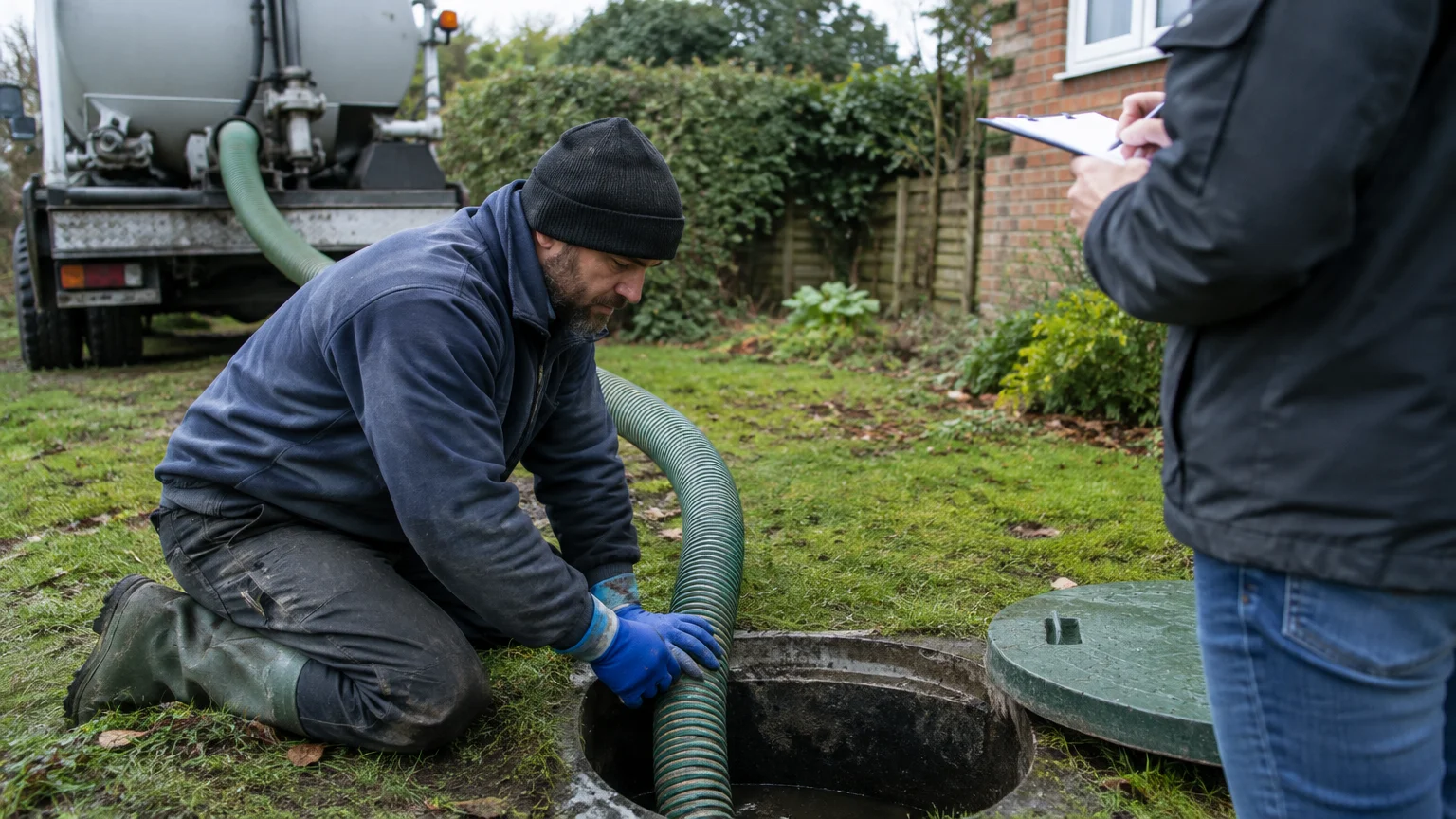
What to expect during a professional pump-out. The worker will reach the tank with the right equipment and remove built-up solids. The worker may also check the tank or note signs that need more attention. You can ask what they found and what records to keep.
A pump-out does not fix a broken tank or damaged drainfield. It is one part of ongoing care. If the professional finds a concern, ask what it means and what step should come next. Keep the report with the home’s septic records for future owners or tenants.
What can go wrong if a septic tank is not pumped on time?
When too many solids build up, they may move out of the tank and reach the drainfield. This can block spaces in the soil that help treat wastewater. Delayed care may also lead to slow drains, sewage smells, or wastewater inside the home.
Solids can move into the drainfield. The tank holds solid waste while liquid moves onward. If the tank is too full or the system is not working well, more solids may leave the tank. The drainfield may then have trouble taking in and treating wastewater.
A drainfield problem may not be easy to see at first. Wet ground or changes in the yard can be a warning. Do not drive or park there to check it. Heavy loads can harm buried pipes or press down the soil.
Backups, damage, and disruption. A system that cannot move wastewater well may cause slow drains or backups. Wastewater can make people and pets sick. Keep them away from any sewage on the ground. Keep children away, too, and seek help from a professional soon.
Waiting for a serious sign may leave the owner with fewer choices. A backup can disrupt daily life. A drainfield problem may need more work than routine pumping. The right fix depends on the cause, system design, and damage found during a check.
Pumping at the right time cannot stop every problem. Pipes can break, tanks can get damaged, and soil can affect how well a system works. Still, records and inspections can help find issues sooner. If a professional says the tank needs care, ask what they found and how soon it needs attention.
What signs may mean a septic tank needs attention?
Slow drains, sewage smells, backups, wet ground, or unusual plant growth near the drainfield may mean the system needs attention. These signs do not prove that the tank is full. A professional should find the cause before you assume pumping will fix it.
Slow drains, sewage odors, and wastewater backups. One slow sink may have a simple clog. But if several drains slow down at the same time, the septic system may be involved. Gurgling sounds or repeated toilet problems can also be reasons to get advice.
A strong sewage smell inside or outside is another warning. Wastewater backing up into the home needs quick attention. Do not keep flushing toilets or running water to test the system. More water may make a backup worse.
Wet ground or unusual growth near the drainfield. A wet patch or greener plants in one area may mean wastewater is not moving as it should. Heavy rain can also make soil wet, so the sign needs context. Note where it appears and whether it stays after dry weather.
Keep people and pets away from wet areas that may have wastewater. Do not dig, cover the spot, or try to move the water. A professional can check the tank, pipes, and drainfield to find the cause.
A septic tank may be buried, and its cover may not be easy to see. Do not search by lifting unknown covers or using heavy tools. If the home has no clear service history, share that when arranging an inspection. This helps the professional avoid guessing about when the tank was last pumped.
When should you call a septic professional?
Call a septic professional if there is a backup, sewage smell, repeated slow drains, or wet ground near the drainfield. Call if you do not know the pumping history, too. A professional can check whether the system needs pumping, repair, or more inspection.
When symptoms appear or pumping history is unknown. Do not try to fix a backup or possible leak yourself. Keep people away from wastewater and limit water use until you get advice. Never enter a tank or lean over an open tank. Dangerous gases can harm or kill a person quickly.
A new buyer, tenant, or property investor may not know when the tank was last pumped. Records help, but missing records do not mean the tank is due on a set date. An inspection can show the system’s current condition and help plan what to do next.
How to plan the next inspection and pumping. Tell the professional what the household has noticed, how many people use the home, and what repairs are known. Ask where the tank and drainfield are and what the inspection found. Also ask when the system should be checked again, then keep the answers with the property records.
Frequently Asked Questions
Can a homeowner pump a septic tank?
No. Pumping needs trained workers and proper equipment. Homeowners can keep records, use water with care, and protect the drainfield, but should not open or enter a tank. Septic tanks may hold dangerous gases, and their covers can be heavy or unsafe to move.
How deep is a septic tank buried?
The depth changes with the property, tank design, and installation. Do not assume a safe depth when looking for a buried tank. Check property records or ask a septic professional to locate it. Do not dig at random or lift an unknown cover.
What is a septic tank riser?
A septic tank riser is an access point that reaches from the tank toward the ground surface. Some systems have one, and others do not. It can make the tank easier to find and reach. A professional can confirm whether the property has a riser.
What size septic tank is needed for a three-bedroom house?
The right tank size depends on local rules, system design, and expected household use. The number of bedrooms can help guide planning, but it does not give the whole answer. A local septic professional or health department can explain the rules for the property.
Does pumping fix every septic system problem?
No. Pumping removes built-up solids, but it does not fix a broken tank, damaged pipe, or failing drainfield. If problems continue after pumping, the system may need more checks. Ask the professional what they found and what work may be needed.
Key takeaways
- Pumping time depends on household use, tank size, and system condition.
- Inspections and clear records help owners plan the next service.
- Homeowners can use water carefully and protect the drainfield.
- Backups, smells, and wet ground need prompt professional attention.
Conclusion. The best pumping plan comes from the home’s use and the system’s condition, not guesswork. Good records and safe habits help owners notice changes and make informed choices. In Ocala, contact Septic Tank Pumping Ocala today to plan an inspection or pump-out.
If you are not sure what you are dealing with, it is worth having someone look at it before it turns into a bigger job. Get in touch with Septic Tank Pumping Ocala today and we will tell you where you stand.