The answer to how long does it take to install a septic system depends on the land, soil, design, permits, and weather. The digging may take only a few days once approval is ready. Planning, inspections, and site repairs often take longer. Ocala property owners should expect several steps from the first visit through final approval.
Table of Contents
- How long does it take to install a septic system?
- What needs to happen before septic system installation?
- What happens during septic system installation?
- How do the septic tank and drainfield work together?
- What can delay a septic system installation?
- What should property owners expect after installation?
- What are common misconceptions about septic installation timelines?
- Frequently Asked Questions
How long does it take to install a septic system?
A septic system may take several weeks or longer from planning to final approval. The digging and main work may take only a few days on a ready site. Soil tests, system design, permits, contractor schedules, inspections, and weather can add more time.
A septic system is a private wastewater system. It treats household water when a property does not use a public sewer. It often has a septic tank, pipes, a drainfield, and soil that treats the liquid waste. The setup depends on the property and Florida rules.
The usual timeline follows these steps:
- The property owner arranges a site review and soil test.
- A designer chooses a system for the soil and water use.
- The needed plans go to the local health office or other authority.
- A contractor sets a work date after approval.
- The tank, pipes, and drainfield are installed.
- An inspector checks the open work before it is covered.
- The contractor restores the area and shares care instructions.
Some lots have simple soil and easy access. Others need a raised, pressure, or alternative system. A large rural lot may also need longer pipes and more site work. Septic Tank Pumping Ocala can help Ocala property owners understand which steps need careful planning.
Typical timeline from planning to final approval
The planning stage often takes longer than the digging. A full application, clear property records, and quick choices can help keep the job moving. Missing details can send plans back for changes.
Why installation schedules vary by property
No two lots are the same. Soil depth, slopes, groundwater, rock, trees, driveways, and property lines can change the design. A first-time buyer or investor should ask for the approved plan and inspection records before setting a move-in date.
What needs to happen before septic system installation?
Before work starts, the property needs a site review, soil testing, a system design, permits, and a work schedule. These steps show where the system can go and what type of system the land can support. Skipping them can cause delays, failed inspections, or problems later.
A site review looks at the whole lot. The reviewer may check slopes, wells, streams, buildings, driveways, property lines, and space for a backup drainfield. The goal is to place the system where it can work safely and meet local rules.
Soil testing checks how well the ground can accept and treat wastewater. Soil with slow movement, shallow rock, or a high water table may need a different design. A drainfield is the area that receives liquid from the tank and spreads it through the soil.
Site evaluation, soil testing, and system design
The designer uses the site findings to choose the tank size, pipe layout, drainfield area, and any needed pumps. The design must match the home, expected water use, and local rules. A larger home or business may need a different plan than a small house.
The owner should share future plans early. A new bedroom, pool, addition, driveway, or detached building may affect the layout. Changing the property after approval may require a design change.
Permits, approvals, and contractor scheduling
Most septic projects need approval before earthwork begins. The office and process can vary by county and state. Owners should check local rules instead of relying on a neighbor's past project.
The contractor can usually set the work date after the permit is ready, the design is accepted, and the site can be reached. Keep the soil report, approved plan, permit, inspection notes, and tank information together. These records help future owners and service workers.
What happens during septic system installation?
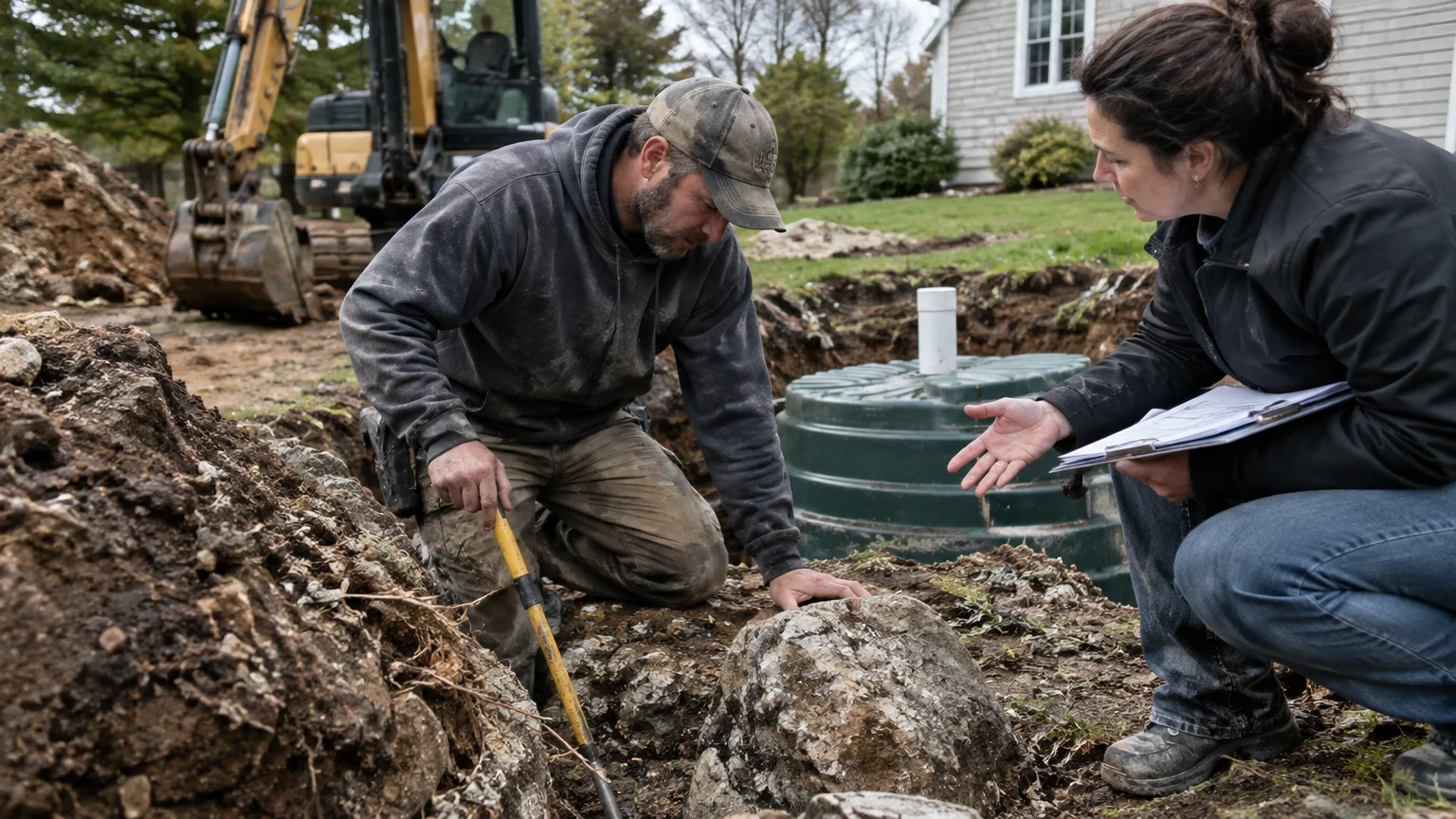
During installation, the crew marks the approved layout, digs the work areas, places the tank, installs pipes, builds the drainfield, and completes required tests. The work must follow the approved design. The crew should not move major parts just because another spot looks easier.
The first step often includes marking underground utilities and the system layout. Excavators then prepare the tank area and drainfield. The tank must sit on stable ground at the approved depth. Pipes need the right slope or pressure controls so wastewater moves as planned.
The tank connects to the building sewer pipe. Inside the tank, heavy solids settle and lighter material floats. Liquid leaves through an outlet and travels toward the drainfield. Some systems use a pump to move liquid to higher ground.
Excavation, tank placement, and drainfield construction
The crew must protect the tank, pipes, and drainfield from heavy equipment. The drainfield should not be used for parking or storage. Deep-rooted plants should also stay away from it. After the inspector checks the open work, the crew can cover the system and shape the ground.
The surface may look rough at first. Soil can settle after backfilling, especially after rain. Owners should follow the contractor's instructions for grass, traffic, and surface water.
How the septic system components connect
Wastewater moves from the home's plumbing through the building sewer pipe to the septic tank. Liquid then leaves through an outlet pipe or pump. It may pass through a distribution box before reaching the drainfield and soil.
Access lids allow the tank to be inspected and cared for. Pumps and distribution boxes help move or divide flow in some systems. Knowing these parts helps families, tenants, buyers, and future service workers understand what is below the ground.
How do the septic tank and drainfield work together?
The septic tank and drainfield have different jobs, but they must work as one system. The tank slows wastewater so solids settle and floating material stays inside. The drainfield spreads the liquid part into soil for more treatment.
When water leaves sinks, toilets, showers, or laundry, it flows through the building sewer pipe. In the tank, heavy solids form sludge at the bottom. Grease and other light material form a scum layer near the top. The middle liquid layer moves toward the outlet as new wastewater enters.
Baffles or outlet devices help keep scum and sludge inside the tank. An effluent filter may also help keep solids out of the drainfield. These parts need checks and cleaning during normal care.
How wastewater moves through the system
The drainfield receives liquid in measured amounts. A distribution box may divide flow among several trenches. Some systems use a pump and controls to send wastewater to the field. The design decides how much liquid each area receives.
A healthy system needs normal water use. Leaking toilets, long showers, and many laundry loads at once can send too much water to the field. Spreading laundry across the week can reduce stress on the system.
How soil treats and filters wastewater
Soil provides the final treatment layer. Small spaces in the soil let liquid move while holding back many harmful particles. Soil organisms help break down some waste as liquid travels downward.
The drainfield needs air, space, and stable soil. Compacted soil, standing water, roots, or heavy vehicles can reduce performance. Owners should keep the field clear and send roof water away from it.
What can delay a septic system installation?
Weather, soil, access, permits, materials, and design changes can delay installation. Rain may make the ground too soft for safe equipment use. Storms and high groundwater can also pause work or require a new plan.
Rock, hard clay, shallow soil, and steep slopes may slow digging. A narrow driveway or fence can limit equipment access. Before work begins, the owner should clear the approved route. Tell the contractor about gates, pets, wells, buried lines, and planned building work.
Weather, soil conditions, and site access
A crew may need to wait until the land can support heavy equipment. Working in wet soil can damage the drainfield and create a poor base for the tank. A safe delay is better than rushing a system that may fail early.
The contractor may also find conditions that were not clear during the first review. Unexpected rock or groundwater may require a design change. The owner should ask what changed, why it matters, and whether new approval is needed.
Permit changes, material availability, and design revisions

A local authority may request more information or corrections. A change in the home plan can affect tank capacity or drainfield size. Material delivery and equipment schedules may affect the start date, even when the permit is ready.
Property owners can reduce confusion by keeping one current plan. They should not hire separate crews to change the layout without written approval. Septic Tank Pumping Ocala can explain what information Ocala homeowners should keep for future septic tank pumping and repair visits.
What should property owners expect after installation?
After installation, the system usually needs an inspection before the work is fully covered or approved. The owner should receive records that show the layout, tank location, care needs, and final approval. The ground may need time to settle and grow new grass.
The inspector checks whether the installation matches the approved plan. This may include tank placement, pipe connections, access openings, drainfield work, and other required details. The local authority decides the exact inspection steps.
Inspections, final approval, and restoring the property
Owners should not cover open work unless the responsible inspector allows it. Photos can help record buried parts, but photos do not replace required approval. After the inspection, the crew can backfill and grade the area.
The owner should keep vehicles and heavy loads away from the drainfield. Surface water should flow away from the system. Grass is often a better cover than trees, deep shrubs, sheds, or concrete. The approved plan and contractor instructions control.
Initial use, maintenance records, and septic tank pumping
A new system still needs careful use. Fix leaks, avoid flushing wipes and grease, and use water wisely. Only toilets, wastewater, and normal household waste should enter the system.
Septic tank pumping removes built-up sludge and scum. The right schedule depends on tank size, household use, solids levels, and local guidance. A service provider can check the tank and record the work. Owners should learn where the tank lids and drainfield are located before an urgent problem occurs.
What are common misconceptions about septic installation timelines?
A common mistake is thinking septic installation starts when the excavator arrives. The process may begin with property research, soil testing, design work, and permits. It is also wrong to assume every property can use the same tank and drainfield layout.
Some owners believe the tank is the whole system. The tank is only one part. The pipes, distribution equipment, drainfield, soil, access points, and care plan all matter.
Why the digging is not the only part of the process
Earthwork may look like the main task, but the system must first be approved and then inspected. A crew can dig quickly and still need time to place parts correctly, protect the drainfield, complete tests, and restore the land.
Visible work does not show the full amount of progress. Much planning happens before equipment arrives. Clear questions and complete records can help the owner understand each stage.
When to contact a septic professional for a project timeline
A professional should be contacted when a property needs a new system, an old system is failing, a building plan changes, or records are missing. A first-time buyer should ask for the approved design and recent inspection details before closing.
A homeowner does not need a professional for every task. The owner can safely find access lids, protect the drainfield, fix simple water leaks, and keep basic records. Excavation, tank placement, electrical work, soil testing, and wastewater design should be handled by qualified professionals.
Key takeaways
- Planning, permits, and soil conditions often control the full timeline.
- The physical installation may be shorter than the approval process.
- The tank, pipes, drainfield, and soil must work as one system.
- Weather, access, rock, groundwater, and design changes can cause delays.
- Keep the approved plan and service records for future care.
Conclusion
The best answer to how long does it take to install a septic system comes from the property plan, not one promise. A clear site review, approved design, ready work area, and timely inspection can help the project move smoothly. Septic Tank Pumping Ocala helps property owners understand what to expect before installation or during ongoing septic care.
Contact us to discuss septic system planning, installation questions, or future maintenance needs.
Frequently Asked Questions
How deep should a septic tank be?
A septic tank should be installed at the depth shown in the approved design. The depth depends on the building sewer pipe, tank shape, soil, access needs, and local rules. The lids must stay reachable for inspection and pumping. Owners should never bury or move lids without professional guidance.
How far does a septic tank need to be from a house?
The required distance depends on state and local rules, site conditions, wells, property lines, water features, and the approved design. A septic professional or local health office can confirm the setback for a specific property. The tank also needs safe access for inspection and septic tank pumping.
How does a septic system work?
Wastewater flows from the home into a septic tank. Solids settle, lighter material floats, and the liquid middle layer moves to the drainfield. The drainfield spreads that liquid through soil, where natural filtering and soil organisms provide more treatment. Proper water use helps the system handle normal household flow.
How can someone find a septic tank lid?
The approved septic plan is the best place to start. If records are missing, an owner can follow the building sewer line from the house, look for small ground markers, or ask a professional to locate the tank. Digging should be careful because buried utility lines and tank parts may be nearby.
Who installs septic tanks near me?
A licensed or otherwise qualified septic installer familiar with local rules should handle tank installation. The property owner should confirm required credentials, permits, insurance, inspection steps, and experience with the planned system. Septic Tank Pumping Ocala can help property owners understand the next step for a septic project.
If you are not sure what you are dealing with, it is worth having someone look at it before it turns into a bigger job. Get in touch with Septic Tank Pumping Ocala today and we will tell you where you stand.